Understanding neurosafety and risk perception bias is imperative for creating safe workplaces. The cookie cutter approach to safety is outdated and risk is subjective based on individual experiences.
Read MoreRobust Leaders
Bringing Neuroscience Into Leadership, Risk and Workplace Culture
About
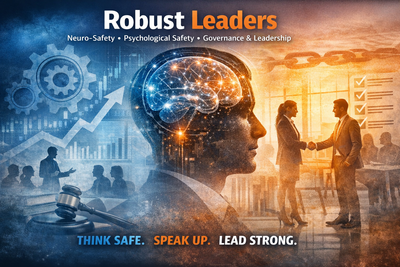
From Wellbeing to Prevention
Helping leaders understand the brain to create safer, healthier and higher-performing workplaces.
Robust Leaders was founded on a simple but powerful belief:
Psychological harm is not inevitable. It is often predictable, preventable and influenced by the way organisations are led, designed and governed.
As psychosocial obligations continue to evolve, many organisations continue to invest heavily in wellbeing initiatives, resilience programs and Employee Assistance Programs while psychological injury claims, burnout, workplace conflict and disengagement continue to rise.
Why?
Because wellbeing is a support strategy.
Prevention is a leadership strategy.
Robust Leaders exists to help organisations move beyond reactive wellbeing initiatives and towards evidence-based prevention by combining neuroscience, leadership, governance and psychosocial risk management.
We help leaders understand not only what people do, but why they do it—and how leadership behaviours, organisational systems and work design directly influence psychological safety, organisational performance and workplace culture.
About Rozanne Byass
Robust Leaders was founded by Rozanne Byass, an Executive Psychosocial Risk Advisor, keynote speaker and organisational risk specialist with a unique multidisciplinary background spanning law, neuroscience, psychology, governance, work health and safety and high-risk operational environments.
Rozanne is a qualified lawyer with a Bachelor of Health Science majoring in Psychology, a Master of Neuroscience, a Diploma of Work Health and Safety, and extensive experience in governance, leadership and organisational risk.
She also served in the Australian Army, where she developed a deep appreciation for leadership, accountability, teamwork and decision-making under pressure.
Over more than two decades, Rozanne has worked across defence, mining, energy, government and complex organisational environments, helping leaders navigate organisational risk, governance obligations, workplace safety and leadership challenges.
Throughout her career she observed the same pattern.
Organisations often respond to psychological harm after it occurs, rather than identifying and addressing the leadership behaviours, psychosocial hazards and organisational systems that create the conditions for harm in the first place.
That observation became the foundation of Robust Leaders.
Today, Rozanne works with CEOs, Executive Teams, Boards and senior leaders to challenge traditional thinking about psychological safety and provide practical, evidence-based strategies that strengthen leadership capability, reduce psychosocial risk and create healthier, higher-performing workplaces.
She is passionate about translating neuroscience into practical leadership strategies that help organisations prevent psychological harm rather than simply responding to it.
Her work sits at the intersection of neuroscience, law, governance and work health and safety, providing leaders with a unique perspective on how human behaviour influences organisational performance, psychosocial risk and culture.
Rozanne believes that leadership is one of the most powerful protective factors in any organisation.
When leaders understand how the brain responds to stress, uncertainty, trust and belonging, they communicate better, make better decisions, build stronger cultures and create environments where people can perform at their best.
Her philosophy is simple:
When leaders understand the brain, they make better decisions for people, performance and organisational success.
What We Do
Robust Leaders partners with organisations to prevent psychological harm and build safer, healthier and higher-performing workplaces through neuroscience-informed leadership and governance.
Executive Psychosocial Risk Advisory
Providing independent strategic advice to CEOs, Executive Teams and Boards on psychosocial risk, leadership decision-making, organisational culture, complaints, investigations and psychologically safe work design.
Leadership Risk Audits
Identifying leadership behaviours, organisational systems and psychosocial hazards that influence trust, communication, workload, conflict, performance and psychological safety before they become significant organisational risks.
Independent Critical Incident Reviews
Delivering objective, neuroscience-informed reviews following workplace conflict, bullying allegations, psychological injury claims, executive complaints or significant organisational events to identify underlying system and leadership factors and provide practical recommendations that reduce future risk.
Keynote Speaking
Thought-provoking keynote presentations that challenge conventional approaches to psychological safety by exploring the neuroscience of trust, stress, leadership and organisational behaviour.
Rozanne's signature keynote, Psychological Safety Isn't an EAP, encourages organisations to move beyond reactive wellbeing initiatives and embrace evidence-based prevention.
Executive Workshops
Practical and engaging leadership workshops that help organisations understand how the brain responds to uncertainty, conflict, feedback, workload and change, enabling leaders to build stronger cultures, improve communication and create psychologically safe workplaces where people can perform at their best.
Our Philosophy
Leadership is about more than managing people. It is a moral obligation.
It is about understanding people.
Understanding how trust is built.
Understanding how stress changes behaviour.
Understanding why people stop speaking up.
Understanding how leadership decisions influence psychological safety, engagement, innovation and performance.
We believe organisations have both an opportunity and a responsibility to create environments where people can thrive.
We believe neuroscience should inform leadership, governance and organisational decision-making.
We believe psychosocial risk should be prevented, not simply managed after harm has occurred.
And we believe that better workplaces begin with leaders who understand the people they lead.
That is why Robust Leaders exists.
Understanding the brain. Preventing psychological harm. Building robust leaders
Consultancy

Executive Psychosocial Risk Advisor
An independent strategic advisor helping CEO's navigate psychosocial risk, leadership complexity and organisational decision-making before issues become crises.
Learn More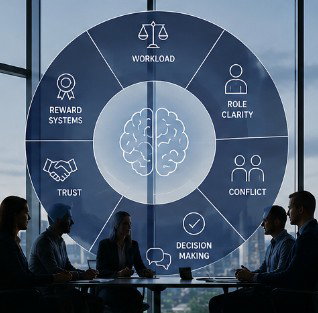
Psychological Risk & Leadership Exposure Audit
Independent evaluation and guidance to help organisation identify leadership behaviours and organisational conditions creating psychosocial risk before they impact people, culture and performance
Learn More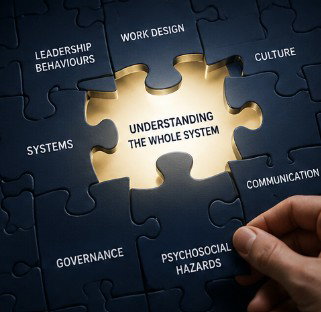
Independent Critical Incident Reviews
Objective neuroscience-informed reviews that identify the organisational and leadership factors contributing to psychological harm and serious workplace events.
Learn More
NeuroLeadership Performance Accelerator
NeuroLeadership Performance Accelerator is a 12-week neuroscience-informed coaching program for managers, leaders, and professionals who want to better understand the human factors that influence performance, behaviour, communication, and team dynamics. Combining neuroscience, psychology, and practical leadership development, this coaching helps leaders understand how stress, decision-making, motivation, psychological safety, and workplace environments impact both individual and team performance. Through personalised coaching, leaders develop greater self-awareness, strengthen communication skills, improve resilience, navigate difficult conversations more effectively, and create healthier, higher-performing workplace cultures where people feel safe, engaged, and able to perform at their best.
Learn MoreKeynotes & Leadership Education
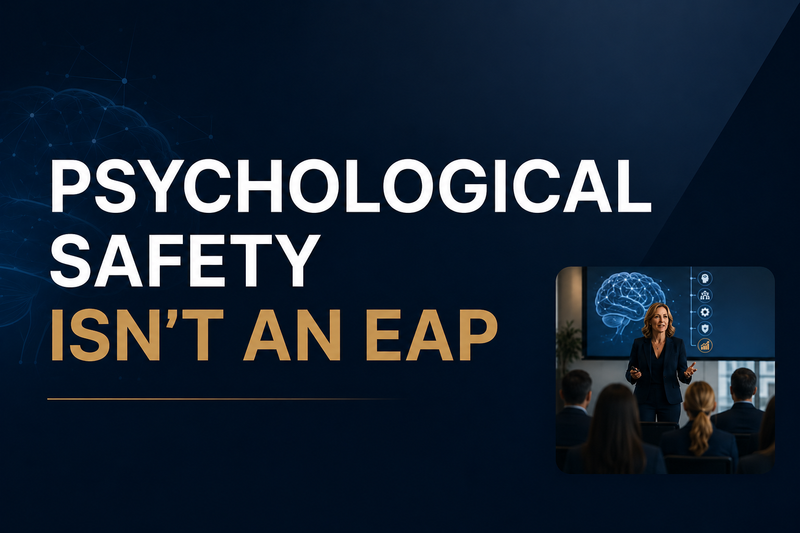
Keynote: Psychological Safety Isn't an EAP
Why organisation continue to create psychological harm despite investing millions in EAP services, wellbeing programs and cupcake days.
Learn More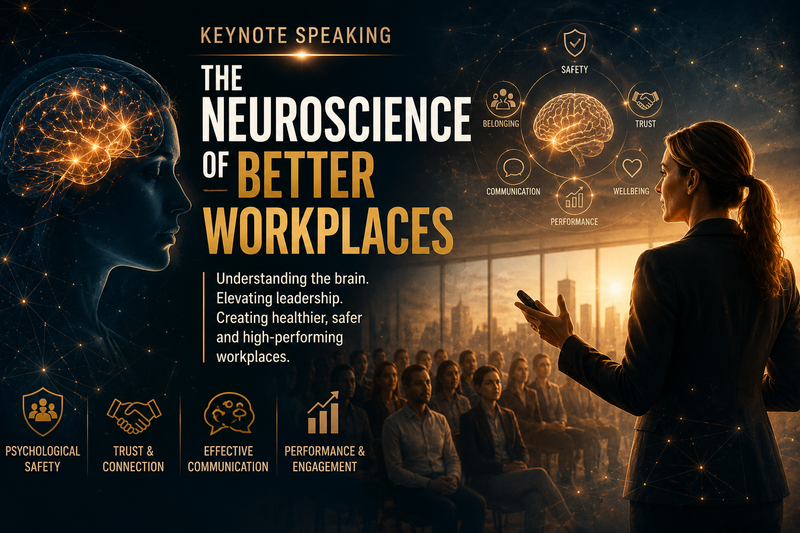
Keynote: The Neuroscience of Better Workplaces
Organisations invest heavily in strategy, systems, technology and performance, yet many continue to struggle with burnout, disengagement, workplace conflict, psychological safety concerns and leadership challenges. The Neuroscience of Better Workplaces™ explores how the brain influences behaviour, communication, trust, psychological safety and performance. Drawing on neuroscience, psychology and leadership research, this keynote provides practical insights that help leaders create healthier workplace cultures, improve employee experience and build high-performing teams.
Learn More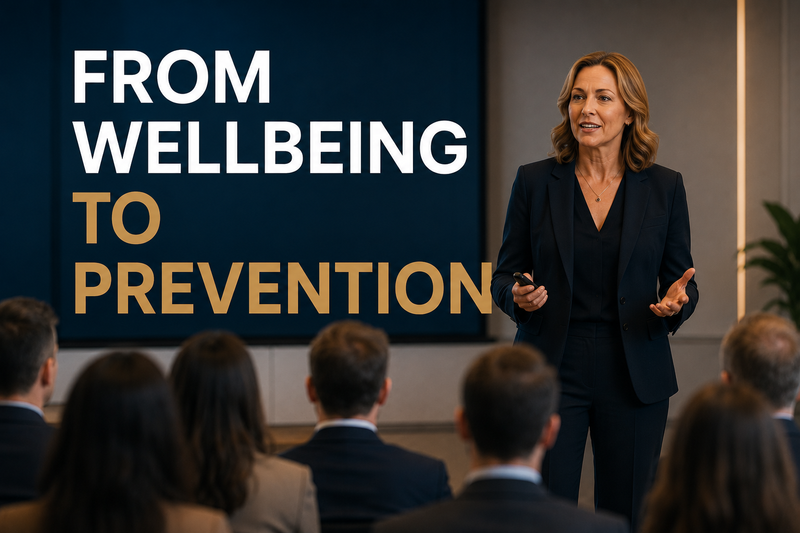
Half-Day Workshop: From Wellbeing to Prevention
Building psychologically safe workplaces through leadership, neuroscience and work design.
Learn MoreArticles
This article examines workplace bullying as a systemic work health and safety hazard, exploring its global prevalence, organisational drivers, and evidence-based strategies for prevention that move beyond individual blame.
Read MoreUnderstanding and resolving health and safety issues from an unconscious perspective.
Read MoreThis article explores how domestic violence causes measurable changes to brain structure and function, arguing that emotional and psychological abuse must be recognised as physical harm with lifelong health, legal and social consequences.
Read MoreThis article explores psychological hazards as invisible but significant workplace risks, outlining employer obligations under WHS laws and explaining how unmanaged psychosocial hazards can harm individuals, teams and business performance.
Read MoreThis article, "🚨 Beyond Verbal Abuse: Uncovering Systemic Bullying in Australian Workplaces," thoroughly examines the prevalence and impact of systemic bullying within professional environments in Australia. It delves into the dynamics of workplace abuse beyond mere verbal conflicts, addressing cultural, structural, and institutional factors contributing to such practices. The discourse highlights real-life case studies, expert insights, and individual experiences to underscore the pressing need for transformative measures to foster dignity, respect, and inclusivity in workplaces. This piece serves as both an exposé and a call to action for sustainable change against workplace bullying.
Read MoreThis article exposes how traditional interviews often fail to identify the most capable candidates, especially those affected by illness, trauma, anxiety, or past workplace bullying. It explores how the brain’s threat response (fight-flight-freeze) impairs verbal performance—leading strong professionals to “fail” interviews despite having deep expertise. Through real-life examples, it reveals how lack of emotional intelligence, poor question design, and rigid recruitment practices undermine fairness and exclude highly competent people. It argues that if organisations truly want to hire great leaders—not just confident speakers—they must redesign interviews with empathy, flexibility, and psychological insight.
Read MoreWhy corporate leaders need a greater understanding of workplace culture. Uncovering the myths of culture and how to identify toxic environments and how to create a psychological safe work space.
Read MoreExploring the impact of insufficient management practices, this article delves into how managers who fail to effectively oversee and guide their teams can lead to decreased employee morale, diminished productivity, and long-term organisational challenges, emphasizing the necessity of robust leadership in today’s corporate landscape.
Read MoreContact
- Perth WA, Australia